Loading
Digifacturing · Resources
Manufacturing Marketing ROI: Where Should You Invest First?
Written by Tarun Gurwara, Manufacturing Consultant, Ahmedabad
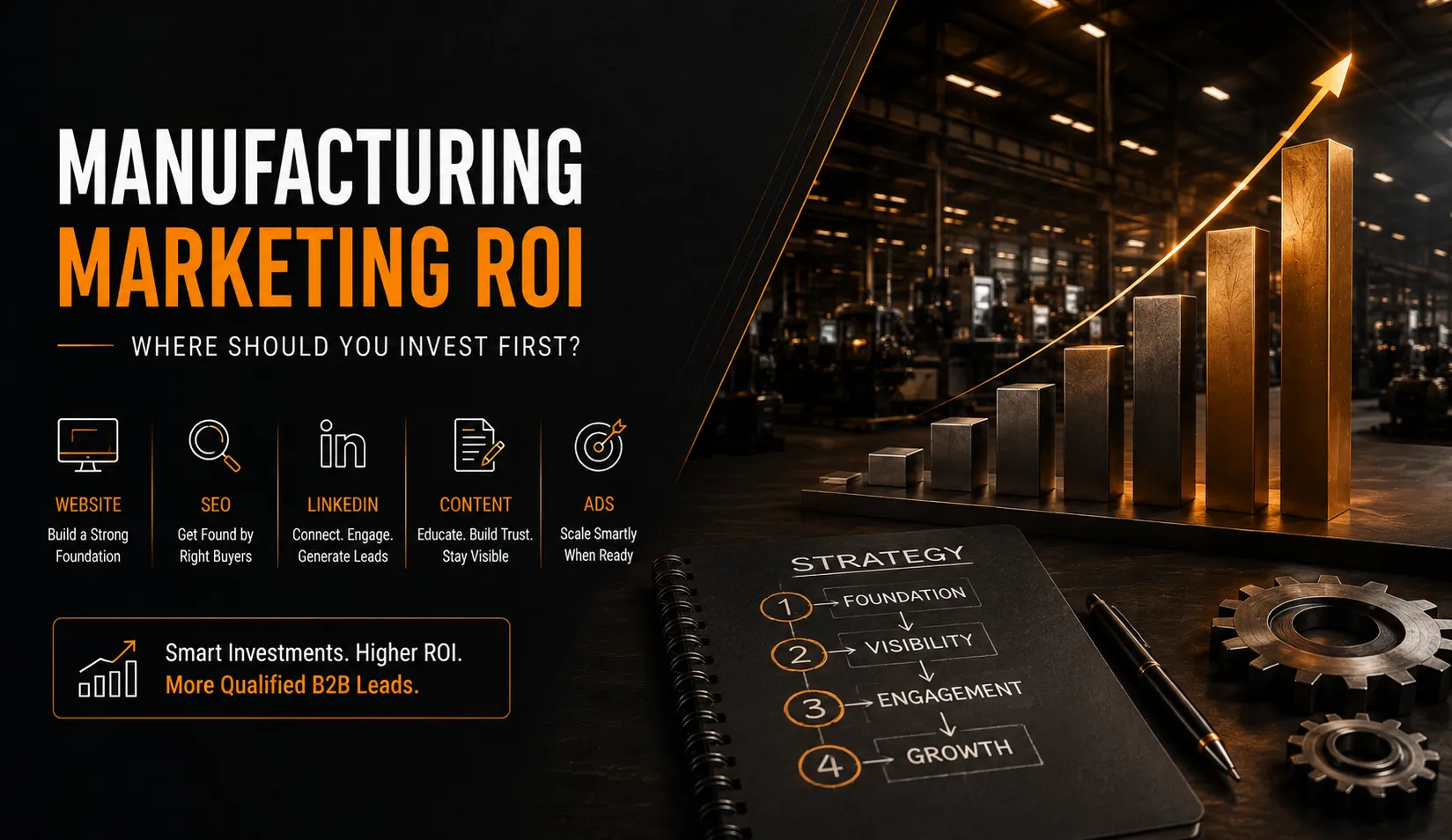
Most factory owners ask the same question when they decide to go digital: where should the first marketing rupee go? The right sequence is website foundation first, then manufacturing SEO, then LinkedIn, then supporting content, and Google Ads only once the foundation is ready to convert. This order protects budget and produces the industrial leads a factory actually needs, rather than activity that looks busy but brings zero enquiries.
Why Marketing ROI Matters More in Manufacturing
Manufacturing sales cycles are long. One qualified enquiry can turn into a multi-lakh or multi-crore order. That makes every marketing rupee high-stakes. Poor investment choices create these common, avoidable problems:
01
Ads Without a Converting Website
Money spent on ads with no website that converts.
02
Content Without a Lead Path
Content created with no clear path to leads.
03
Incomplete LinkedIn Presence
LinkedIn activity with incomplete company profiles.
04
SEO Started Too Late
SEO work started too late, after paid campaigns have already failed.
The goal is simple: put money first into assets that keep working for years, then add channels that scale once the foundation is ready.
The Correct Order of Investment for Highest Manufacturing Marketing ROI
01
Website Foundation and Manufacturer Website Design
The highest ROI starting point for almost every factory. Your website is the place every LinkedIn message, Google search, WhatsApp enquiry and email eventually lands. Focus first on clean design that shows plant photos, machinery, certifications and process capability, clear contact forms and WhatsApp buttons, mobile-friendly pages, and basic SEO structure so pages can rank later. A strong website improves the return of every future marketing rupee.
02
Manufacturing SEO for Organic B2B Leads
Once the website is solid, invest in manufacturing SEO. Organic search remains one of the highest converting sources of B2B manufacturing leads. Priority actions: keyword research focused on process, material, certification and location terms, technical fixes so Google can crawl and index the site properly, content that answers real buyer questions, and local, India-focused pages where relevant. SEO takes 3 to 6 months, but leads keep coming with very low marginal cost.
03
LinkedIn for Direct Industrial Lead Generation
Decision makers in procurement, plant operations and purchasing spend time on LinkedIn. Key investments: a complete company page and founder or sales head profiles, regular content showing real factory work, targeted connection building with the right titles, and simple systems to move conversations into WhatsApp or calls. LinkedIn works especially well for export marketing and for building trust with new buyers.
04
Content That Supports Both SEO and LinkedIn
Content is not a separate channel, it multiplies the return of SEO and LinkedIn. Useful content includes process videos and capability explanations, case studies of completed jobs, answers to common buyer questions, and export readiness and quality documentation posts, planned around real search terms and buyer problems.
05
Google Ads Only After Foundation Is Ready
Google Ads can bring leads fast, but many factories start here and burn budget. Ads work best when the website already converts visitors into enquiries, you have clear tracking of form fills and calls, and you target precise long-tail manufacturing terms instead of broad keywords. Starting too early usually produces high cost per lead and low quality enquiries.
How to Decide the Right Budget Split
There is no single formula, but this sequence works for most mid-size manufacturers:
First 40 to 50 percent: website fixes, basic SEO and professional profiles
Next 30 percent: consistent LinkedIn activity and content
Remaining 20 to 30 percent: Google Ads, once conversion tracking is clean
Track every rupee against qualified leads and actual RFQs, not just traffic or likes. This is the only way to measure true manufacturing marketing ROI.
Signs Your Manufacturing Company Needs Digital Marketing Help
Many owners wait too long. Watch for these signals:
01
Almost No Online Enquiries
Almost no online enquiries despite good plant capability.
02
Outdated, Non-Mobile Website
A website that looks outdated or does not load on mobile.
03
Sales Team Relies on Contacts Alone
Sales team still relies only on personal contacts and exhibitions.
04
Competitors Rank First
Competitors appearing first on Google for your process terms.
05
Export Enquiries Going Elsewhere
Export enquiries going to other Indian suppliers who look more professional online.
If several of these are true, the cost of delay is higher than the cost of starting properly.
Agency or In-House: What Gives Better ROI?
Some factories try to do everything in-house. Others hire a full manufacturing marketing agency immediately. A practical middle path works best for most: keep strategy and final decisions with the owner or a trusted internal person, bring external help for technical website work, SEO execution and content systems, and use a manufacturing consultant who understands factory realities instead of a generic digital agency.
The right support reduces waste and shortens the time to first results. Learn more about the Digifacturing approach and the consultant behind it on the about page →.
Realistic Timeline for Results
- —Website improvements: visible trust and conversion lift within weeks
- —LinkedIn activity: conversations and early leads in 60 to 90 days
- —Manufacturing SEO: meaningful organic traffic and enquiries in 4 to 6 months
- —Combined Digifacturing system: steady pipeline growth in 6 to 12 months
Patience with the right sequence produces far better ROI than jumping between tactics every month.
Start With the Highest ROI Moves
Manufacturing marketing does not need to be complicated or expensive. It needs the right order of investment. Fix the website. Build visibility through manufacturing SEO and LinkedIn. Add paid channels only when the system is ready to convert.
This sequence protects your budget and produces the industrial leads your factory actually needs.
Get Started
Want a clear assessment of where your current marketing stands and what to fix first? Book a free 30 minute Digifacturing Audit with Tarun Gurwara.
Frequently Asked Questions
Commercial
Where should a manufacturing company invest first in digital marketing?
Start with the website and basic manufacturer website design. Then move to manufacturing SEO and LinkedIn. Add Google Ads only after the foundation converts visitors into leads.
Commercial
How long does it take to see results from B2B marketing in manufacturing?
LinkedIn can produce conversations in 2 to 3 months. SEO usually needs 4 to 6 months for steady enquiries. Full pipeline impact from a complete system often appears between 6 and 12 months.
EntityCommercial
Is SEO or Google Ads better for manufacturing marketing ROI?
SEO generally delivers higher long-term ROI because leads keep coming without continuous spend. Google Ads is useful for speed once the website and tracking are ready.
Commercial
Should I hire an agency or handle digital marketing in-house?
Most factories get better results with a hybrid approach: internal ownership of strategy plus external execution support from someone who understands manufacturing.
Entity
What is Digifacturing and how does it improve marketing ROI?
Digifacturing is the practical method of combining digital tools and digital marketing specifically for manufacturing growth. It focuses on the sequence and systems that turn online activity into real factory leads and orders.
Sequence Over Spend
Fix the Order, Fix the ROI
Book a free 30-minute Digifacturing Audit with Tarun Gurwara and find out exactly where your first marketing rupee should go.
Ahmedabad, Gujarat, India · Digifacturing · Tarun Gurwara